Your Nervous System: The Body’s Built-In Safety Officer
We hear a lot about stress these days.
Stress management. Stress relief. Reducing stress.
But what if we are missing the bigger picture?
What if it is not really about stress at all?
What if it is about safety?
Your Nervous System Has One Main Job
At its core, your nervous system is constantly asking one question:
Am I safe… or not?
That is it.
Everything else in your body is influenced by how that question is answered.
Your heart rate
Your breathing
Your muscle tension
Your digestion
Your circulation
Even your ability to heal
All of it is shaped by whether your body perceives safety or threat.
When the Body Feels Safe
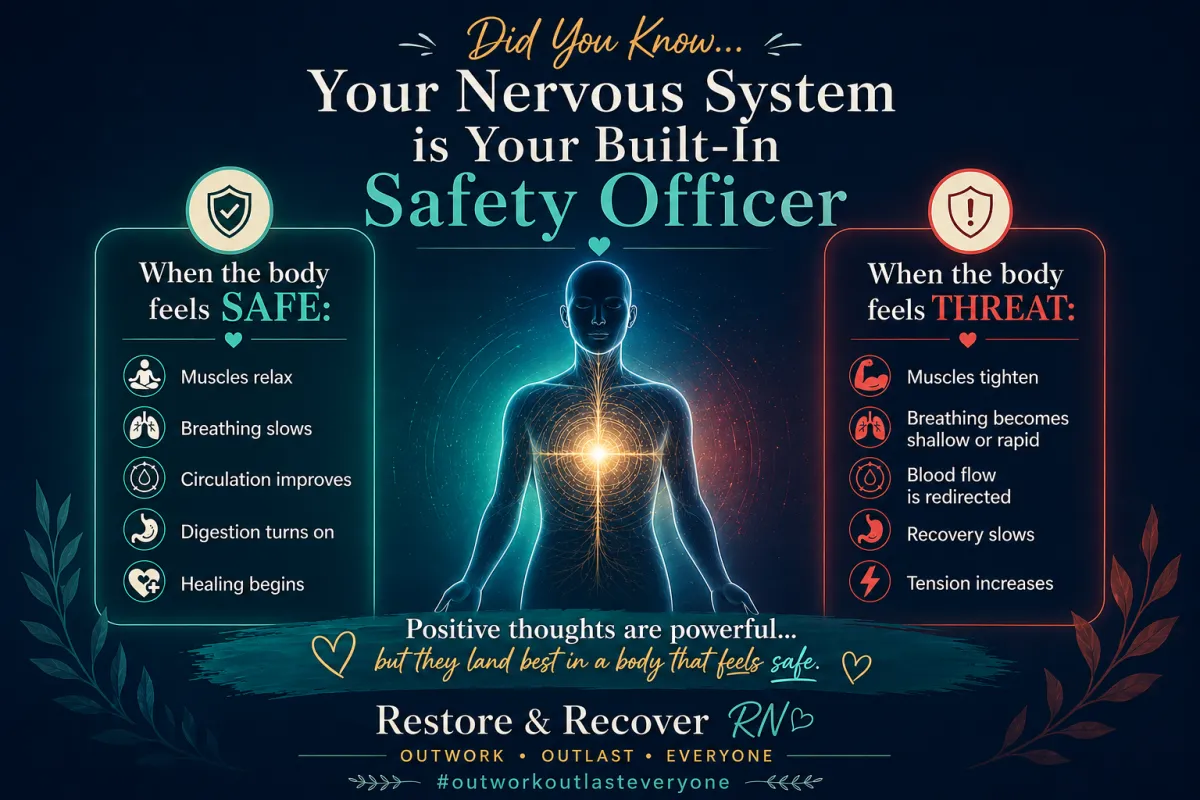
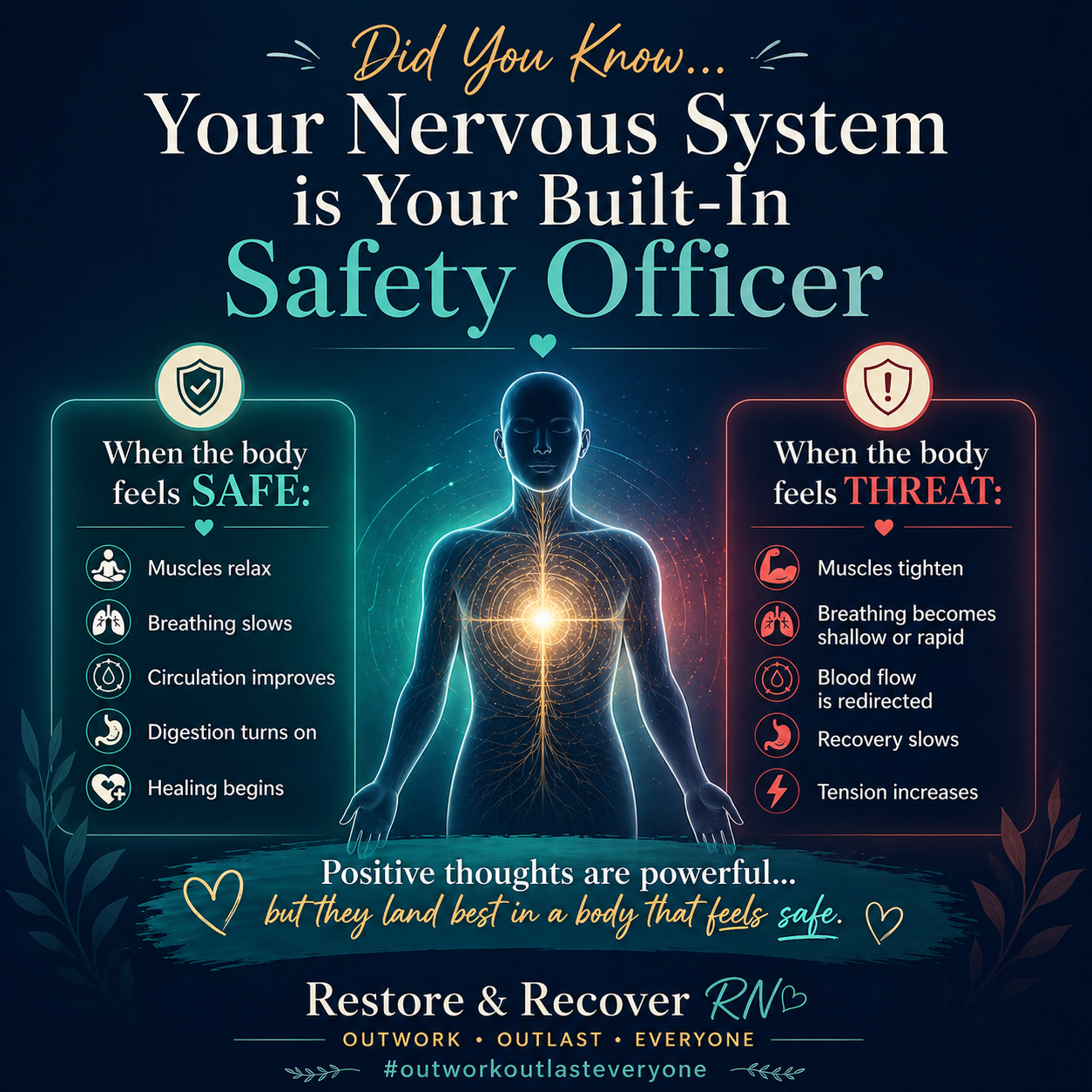
When your nervous system senses safety, the parasympathetic system becomes more active.
This is often referred to as “rest and digest,” but it is much more than that.
In a state of safety:
Muscles begin to relax
Breathing becomes slower and deeper
Blood flow improves
Digestion turns back on
The body can begin repair and recovery
This is the state where healing happens.
When the Body Feels Threat
When your nervous system senses threat, the sympathetic system takes over.
This is your survival response.
In this state:
Muscles tighten
Breathing becomes shallow or rapid
Blood is redirected away from digestion
The body prioritizes protection over healing
This response is not bad. It is necessary.
The important thing to understand is that the nervous system does not only respond to physical danger.
Sometimes the threat is obvious:
pain
injury
illness
a frightening situation
But sometimes the threat is perceived rather than physical.
Thoughts such as:
“I cannot pay my bills”
“People do not like me”
“I am failing”
“I cannot keep up”
can also signal danger to the nervous system.
The body often responds to emotional stress, uncertainty, overwhelm, conflict, or chronic worry in many of the same ways it responds to physical threat.
That does not mean the danger is imaginary.
It means the nervous system is doing what it was designed to do:
trying to protect you.
But the problem comes when the body stays here too long.
Many people live in a constant low-level state of “not safe” without even realizing it.
What Helps the Nervous System Feel Safe?
Safety is not simply the absence of danger.
A nervous system can experience safety through physical, emotional, social, and environmental cues.
Sometimes the signals are simple:
slow, intentional breathing
adequate rest
movement
nourishing food
therapeutic touch
calm environments
time in nature
Sometimes safety comes through connection:
feeling understood
encouragement
a calm voice
healthy relationships
laughter
feeling accepted and supported
Even our thoughts can influence the nervous system.
Thoughts such as:
“I can handle this”
“This moment will pass”
“I am supported”
can help create a greater sense of steadiness within the body over time.
This does not mean life becomes stress-free or perfect.
It means the nervous system has moments where it can stop bracing for danger long enough to rest, regulate, and recover.
And that matters more than many people realize.
It Is Not Just About Being “Positive”
There is a lot of messaging out there about positive thinking and positive emotions.
Think positive
Stay positive
Focus on the good
And there is real value in that.
The way we think can absolutely influence how we feel and how we move through the world.
But there is another layer that often gets overlooked.
Positive emotions are not something we should feel pressured to force.
They tend to come more naturally when the body begins to feel safe.
When your nervous system shifts into a state of safety, things start to change:
You think more clearly
You feel more grounded
Your body functions more efficiently
From that place, positive thoughts and emotions are easier to access and sustain.
It is not about choosing one or the other.
It is about supporting the body so both can work together.
Why This Matters for Your Health
As a nurse, I was taught a lot about systems in the body.
Cardiac
Respiratory
Endocrine
But what often gets less attention is how much the nervous system influences all of them.
If the nervous system is stuck in a state of threat:
Healing can be delayed
Inflammation can increase
Tension can become chronic
Recovery takes longer
When the nervous system shifts toward safety:
Circulation improves
The body uses oxygen and nutrients more efficiently
Repair processes are more active
This is where true recovery begins.
Simple Ways to Support a State of Safety
The good news is that you can influence your nervous system in simple, consistent ways.
You do not need anything complicated.
Start with:
Intentional Breathing
Slow, diaphragmatic breathing signals safety to the body.
Even a few minutes can begin to shift your state.
Awareness of Tension
Noticing where you are holding tension is often the first step to releasing it.
Slowing Down
Your body cannot feel safe if everything is rushed all the time.
Movement
Gentle, consistent movement can help support circulation, regulation, and overall nervous system health.
Bringing It All Together
Your body is not working against you.
It is responding exactly the way it was designed to.
If you feel tense, overwhelmed, exhausted, or stuck, it is not a failure.
It may simply be your nervous system doing its job.
Protecting you.
The goal is not to override that system.
The goal is to help it recognize when it is safe to let go.
Final Thought
Healing does not start with force.
It starts with safety.
Thank you for reading.
Until next time… take a moment to slow down, breathe, and support your body.
Wendy McLaughlin, RN
Restore & Recover RN
#outworkoutlasteveryone

