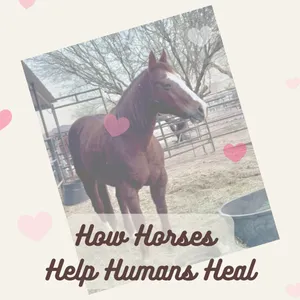
Barnside Thoughts: How Horses Help Humans Heal
Barnside Thoughts:
Part 2 | From Instinct to Healing | The Science Behind Therapy Horses
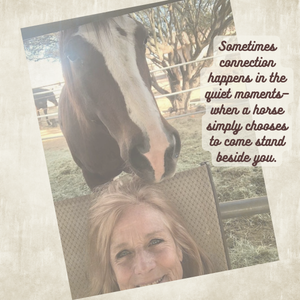
In my last Barnside Thoughts post, I shared a quiet moment with my gelding Spoon that raised the question of instinct versus intuition in horses. That reflection led me down another path | understanding the science behind therapy horses and how their presence can help regulate the human nervous system.
My recent reflections on instinct and intuition led me down another path, one I didn’t initially expect.
The science behind therapy horses.
And more specifically, how horses help regulate the human nervous system in ways that words often cannot.
This topic feels especially personal to me. As a registered nurse working in addiction recovery, I see firsthand how trauma, stress, and substance use profoundly affect the nervous system. Healing isn’t just about changing behavior. It’s about restoring a sense of safety within the body.
This is where horses offer something uniquely powerful.
Not because they are therapists.
But because of how they exist.
Horses Live in a State of Nervous System Awareness
Horses are prey animals. Their survival has always depended on their ability to detect danger early. Their nervous systems are constantly monitoring their environment, listening, observing, assessing.
But equally important is their ability to return to calm once safety is confirmed.
They do not remain in a prolonged state of stress when there is no threat.
They reset.
This is something humans, especially those who have experienced trauma, often struggle with. The nervous system can become stuck in a state of hypervigilance - always scanning, always preparing, even when danger is no longer present.
Horses model something different.
They model awareness without chronic anxiety.
Understanding Co-Regulation
One of the most important concepts behind equine therapy is something called co-regulation.
Co-regulation is the process by which one nervous system helps another nervous system return to a calmer, safer state.
This happens automatically and unconsciously.
When a person is anxious, their sympathetic nervous system is activated. Heart rate increases. Breathing becomes shallow. Muscles tense. The body prepares for threat, even when none exists.
When that same person stands beside a calm, regulated horse, their nervous system begins to detect signals of safety. These signals come through subtle but powerful cues: the horse’s slow breathing, relaxed posture, steady presence, and lack of alarm.
The horse does not mirror the person’s anxiety.
Instead, the horse provides a stable reference point.
The human nervous system detects this stability and begins to adjust.
As the brain perceives safety, the parasympathetic nervous system, the part responsible for rest and recovery, begins to activate. Breathing slows. Muscle tension decreases. Heart rate gradually lowers.
This process is not forced.
It is felt.
And it is deeply biological.
My Own Experience with Co-Regulation
I’ve experienced this in a very personal way myself. On occasion, I’ve woken up in the middle of the night with my heart racing. Of course, the more I focus on it, the more it races.
When that happens, I put on my robe, walk out to the barn, and hug one of my horses - most often Rosie. I usually stand on her left side near her shoulder, where a horse’s heart sits within the chest.
Within a few minutes, my breathing slows, my heart rate settles, and the feeling of alarm fades.
Then it’s back to bed.
At the time, I simply thought of it as one of the quiet comforts of having horses nearby. Now, understanding the science of co-regulation, it makes perfect sense. A calm, regulated nervous system - like that of a relaxed horse - can send powerful signals of safety to our own bodies.
Sometimes healing really is that simple.
Why Horses Are So Effective at This
Horses live in a state of honesty. Their nervous systems reflect what they truly feel, not what they pretend to feel.
Humans, on the other hand, often mask their internal state. We may appear calm externally while internally feeling anxious or unsettled.
Horses detect this incongruence immediately.
They respond to authenticity.
When a horse remains calm in the presence of a dysregulated human, it sends a powerful message to the human nervous system:
You are safe.
Over time, this allows the human nervous system to relearn what safety feels like.
This is especially important for individuals recovering from trauma or addiction, where the nervous system has spent extended periods in survival mode.
Not Every Horse Is Suited for This Role
The most effective therapy horses are not necessarily the quietest or the oldest.
They are the most regulated.
They are aware without being reactive. Sensitive without being overwhelmed. Observant without escalating.
These horses notice changes in their environment and in the humans around them, but they do not lose their own sense of calm.
Horses like Spoon and Rosie.
As cutting horses, they have spent years reading subtle changes in movement and intention. That sensitivity made them exceptional in their work.
Now, in a quieter phase of life, that same nervous system awareness allows them to offer something different.
Presence.
Stability.
Safety.
Sometimes Healing Happens in Silence
Horses do not analyze the past. They do not worry about the future.
They exist in the present moment.
When it is safe, they relax.
When it is not, they prepare.
When safety returns, they release.
There is something profoundly healing about being near an animal that lives this way.
Horses do not heal us directly.
They help our nervous systems remember how to heal themselves.
And sometimes, that is exactly what we need.
Perhaps what horses offer us most is not healing itself, but a reminder of what safety feels like inside our own bodies.
Thank you for taking a few moments to read and share in these thoughts and experiences with me.
Until next time,
Wendy