Longevity Starts Small: The Role of Microcirculation in Healthy Aging
Why Tiny Blood Vessels May Matter More Than We Think:
Microcirculation and Healthy Longevity

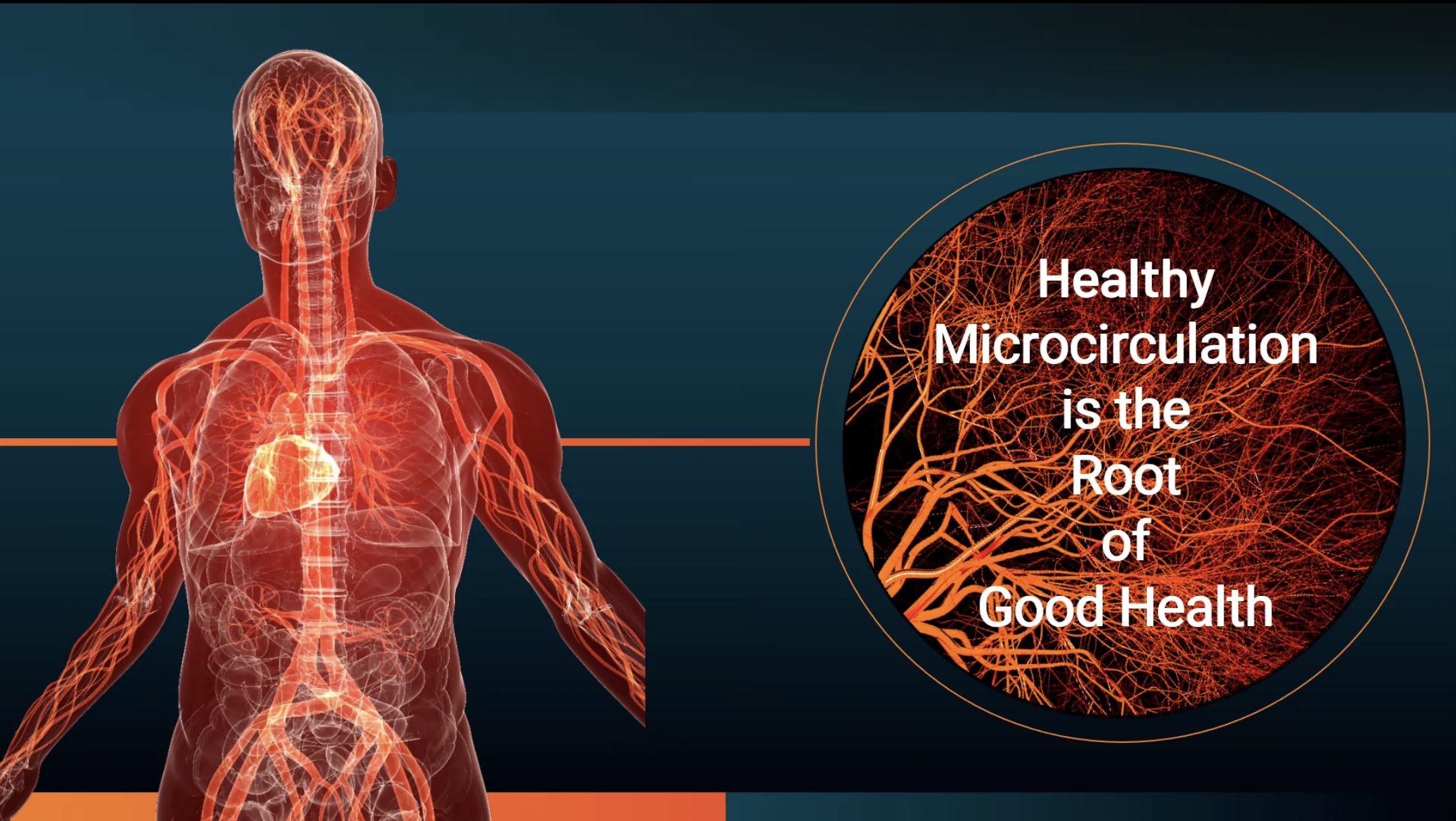
When most people think about circulation, they picture the heart, arteries, and veins. But some of the most important work in the body happens in vessels so small we cannot see them with the naked eye. In fact, the smallest blood vessels make up an estimated 74% of the circulatory system. This huge network of tiny vessels is called the microcirculation.
Microcirculation refers to blood flow through the smallest blood vessels, especially the capillaries. These vessels are responsible for delivering oxygen and nutrients directly to the tissues while also helping remove carbon dioxide, metabolic waste, and toxins.
In simple terms, tissues are the body’s living structures, including muscle, skin, organs, nerves, and connective tissue, and they all depend on healthy blood flow to receive oxygen and nutrients and remove waste.
Although we often think of circulation in terms of the heart and larger blood vessels, the smallest vessels make up an estimated 74% of the circulatory system. This helps explain why microcirculation is such an important part of the conversation around health, recovery, and longevity.Microcirculation is where the exchange happens. It is where the blood actually serves the cells.
A 2019 scientific article titled A Microcirculatory Theory of Aging proposed an interesting idea: aging may be closely connected to the gradual impairment of microcirculation throughout the body. The author describes aging as a progressive decline in physiological function and suggests that when microcirculation becomes less efficient over time, tissues may receive less oxygen and nutrition while waste products accumulate.
That is a big concept, but it makes sense when we break it down.
Your Cells Depend on Delivery and Removal
Every tissue in the body depends on two basic things: receiving what it needs and getting rid of what it does not.
Healthy microcirculation helps deliver:
Oxygen
Nutrients
Hormones and signaling molecules
Immune support
Fluid balance
It also helps remove:
Carbon dioxide
Metabolic waste
Inflammatory byproducts
Cellular debris
Toxins
When this exchange system is working well, cells and tissues are better supported. When it becomes sluggish, stagnant or impaired, the tissue environment can become less ideal.
The article explains that microcirculatory dysfunction over time may contribute to the accumulation of waste products and loss of oxygen and nutrient delivery in tissues and organs. This, in turn, may affect normal tissue and organ function.
Why Microcirculation Matters in Aging
Aging is not just about wrinkles, gray hair, or feeling less energetic. On a deeper level, aging involves gradual changes in tissue function, repair capacity, oxygen use, inflammation, and cellular resilience.
Microcirculation is connected to all of these.
If cells are not receiving oxygen efficiently, they cannot produce energy as well. If waste products are not being cleared efficiently, tissues may become more vulnerable to inflammation and stress. If nutrients are not reaching the tissues properly, repair and recovery may be affected.
This is why microcirculation is such an important area of study in health, performance, recovery, and aging.
The author’s theory does not claim that microcirculation is the only factor involved in aging. Aging is complex and includes genetics, inflammation, oxidative stress, mitochondrial function, hormonal changes, lifestyle, disease, and many other factors. But the microcirculatory theory gives us a helpful way to understand how blood flow at the smallest vessel level may influence the health of the whole body.
Think of Microcirculation Like a Delivery Road System
One simple way to picture microcirculation is to imagine a delivery system.
Large highways are like the major arteries and veins. They move traffic across long distances. But the small neighborhood roads are what allow packages to actually reach the front door.
Capillaries are like those neighborhood roads.
If the main highways are open but the small roads are blocked, damaged, or poorly functioning, the delivery still does not reach the final destination. In the body, that final destination is the cell.
This is why healthy circulation is not just about blood pressure or heart function. It is also about whether the smallest vessels are able to deliver oxygen and nutrients where they are needed most.
Microcirculation, Recovery, and Daily Function
For people interested in wellness, movement, recovery, and longevity, microcirculation deserves attention.
Healthy microcirculatory function supports the body’s natural ability to:
Maintain tissue oxygenation
Support cellular energy production
Clear metabolic waste
Support post-exercise recovery
Maintain healthy tissue function
Respond to stress and repair needs
This does not mean microcirculation is a magic answer. But it does mean that supporting healthy blood flow at the capillary level may be one important piece of the bigger wellness picture.
What Supports Healthy Microcirculation?
While the article focuses on the theory of aging, many foundational wellness habits are known to support vascular and circulatory health in general.
These include regular movement, hydration, balanced nutrition, healthy sleep, stress management, avoiding smoking, and managing conditions such as diabetes, high blood pressure, and cardiovascular disease with appropriate medical guidance.
Movement is especially important because muscles help stimulate circulation. Even gentle activity can support blood flow and tissue oxygenation. This is one reason that daily movement, walking, stretching, and recovery practices are so valuable as we age.
Bringing the Science Back to Real Life
The most powerful part of this theory is that it brings aging down to the tissue level.
Aging is not only about the number of birthdays we have had. It is also about how well our cells are being supplied, supported, and cleaned up each day.
Microcirculation is not flashy. It is tiny, quiet, and often overlooked. But it may be one of the most important systems involved in long-term function, recovery, and healthy aging.
The better we understand the small vessels, the better we understand the big picture of wellness.
Final Thoughts
The microcirculatory theory of aging reminds us that health is built from the inside out, starting at the cellular level. When oxygen and nutrients can reach the tissues and waste products can be removed efficiently, the body has a better environment for function, repair, and resilience.
Aging is complex, and no single theory explains everything. But microcirculation gives us a science-based lens for understanding why blood flow, movement, recovery, and cellular support matter so much over time.
Healthy aging is not just about living longer. It is about supporting the body’s ability to function well for as long as possible.
Thanks for reading, and until next time, keep learning, keep moving, and keep supporting the small things that make a big difference.
This article was written as an educational summary inspired by the scientific paper, “A Microcirculatory Theory of Aging.” Thank you for taking the time to learn more about this important aspect of your body, your circulation, and your long-term well-being.
Wendy McLaughlin
Registered Nurse

